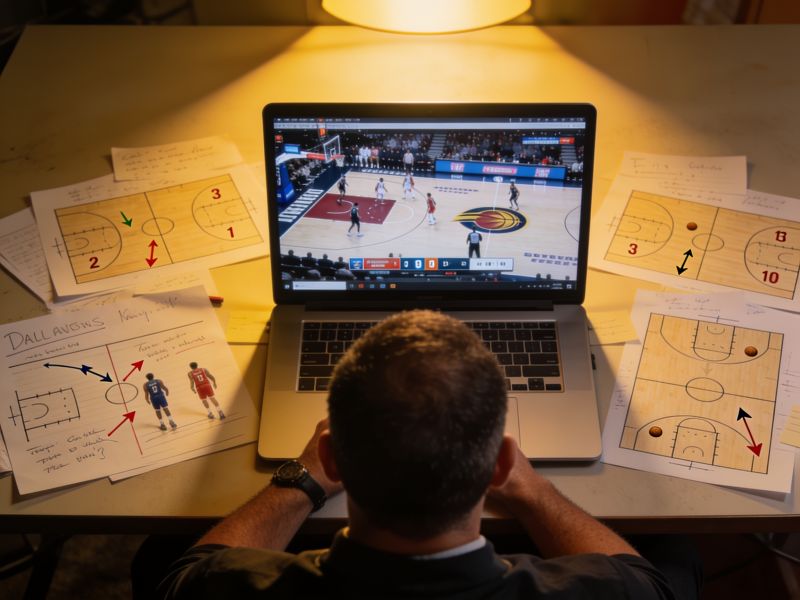
Becoming an NBA expert isn't about memorizing every stat or watching every game. It's about understanding the game beneath the game—the schemes, the economics, the history that shapes decisions. I learned this the hard way after years of casual fandom. The turning point came when I started tracking front-office moves as closely as box scores. Take the 2023 trade deadline: when the Phoenix Suns acquired Kevin Durant, most fans focused on the scoring punch. An NBA expert looks at the salary cap implications。the depleted depth, and the future flexibility sacrificed. That shift in perspective is what separates a fan from an expert.Start with a framework. The NBA is a copycat league, so identifying trends early gives you an edge. The rise of the 'positionless' basketball didn't happen overnight—it was a response to the Golden State Warriors' small-ball death lineup. Watch how teams draft and sign players to counter that. For example, the Denver Nuggets built around Nikola Jokić, a center who operates like a point guard. An NBA expert would note that this isn't just about talent;it's about exploiting mismatches in a league that values switchability. Dive into film breakdowns on YouTube or The Athletic—they're goldmines for learning concepts like 'drop coverage' or 'short roll passes.'Data is your friend。but don't drown in it. Advanced metrics like PER, Win Shares, and RAPTOR are useful, but context matters. I remember arguing with a friend who swore that a player with a high PER was elite, ignoring that he played on a tanking team with inflated usage. An NBA expert cross-references metrics with eye tests and situational stats—clutch performance, playoff adjustments, defensive assignments. Follow writers like Zach Lowe or Ben Taylor;they blend numbers with nuance. Also, track injury reports and load management patterns. The Toronto Raptors' 2019 championship run was partly masterminded by Kawhi Leonard's load management, a strategy that's now commonplace.
History repeats. Study past dynasties and draft busts. The 1984 draft, featuring Hakeem Olajuwon, Michael Jordan, and Charles Barkley。is a masterclass in scouting. An NBA expert knows why Sam Bowie went before Jordan—it was about positional need and medical red flags. That kind of historical context helps you evaluate current prospects. I often revisit the 2003 draft: LeBron James was a generational talent, but Darko Milicic's selection ahead of Carmelo Anthony, Chris Bosh, and Dwyane Wade still puzzles. Understanding these decisions requires looking at team timelines, ownership pressures。
and international scouting gaps.Finally, engage with the community. Twitter (X) is a firehose of hot takes。but it's also where insiders like Adrian Wojnarowski and Shams Charania break news. Follow beat writers for local teams—they catch rotation changes and locker-room dynamics. Listen to podcasts like The Lowe Post or The Mismatch for diverse perspectives. An NBA expert doesn't just consume;they debate. Join a fantasy league or a Discord server and test your theories. I once predicted the Memphis Grizzlies' rise based on their draft capital and young core—felt good when they became a force in the West. Keep questioning, keep watching, and soon you'll see the game in a new light.