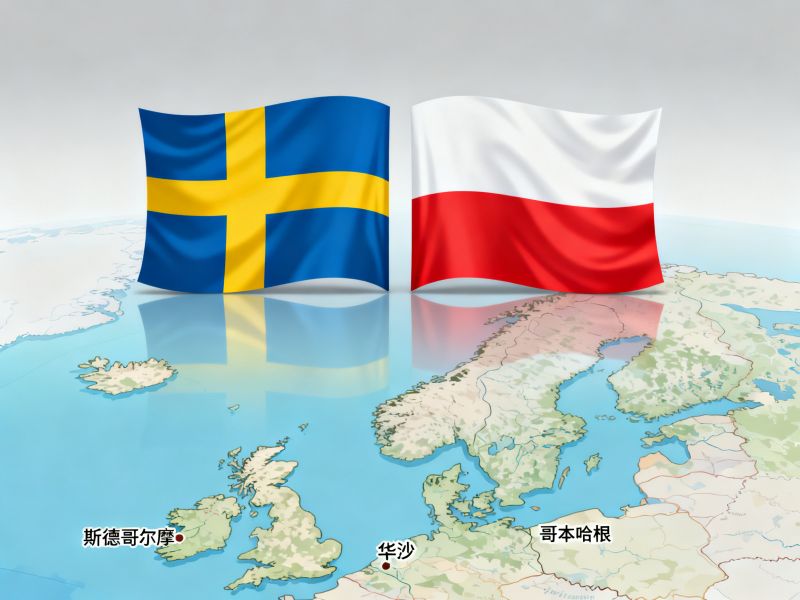
weden and Poland share the Baltic Sea but little else in their political and economic trajectories. Sweden’s GDP per capita sits near $55,000, while Poland’s hovers around $18,000—a gap that reflects decades of divergent development paths. This Sweden vs. Poland comparison often centers on economic output。yet the more telling contrasts emerge in governance, social attitudes, and energy policy.On a visit to Stockholm last spring, I noticed how the city’s efficiency—from digital ticketing to seamless waste management—feels almost invisible, a quiet backdrop to daily life. Poland, by contrast, wears its transformation on its sleeve. Warsaw’s skyline, studded with new glass towers, tells a story of rapid catch-up. The Sweden vs. Poland economic narrative isn’t just about numbers;it’s about the texture of everyday infrastructure. Poland’s GDP growth has outpaced Sweden’s for most of the past two decades。
but Sweden still leads in innovation output per capita, largely due to sustained R&D spending that Poland is only beginning to match.Political culture offers another sharp divide. Sweden’s consensus-driven model, built on strong unions and employer associations, produces stable policy but can feel slow to outsiders. Poland’s majoritarian system。shaped by its 1997 constitution, often swings between reformist and conservative coalitions, generating volatility that sometimes unsettles investors. The Sweden vs. Poland debate in Brussels frequently touches on rule-of-law issues, with Sweden consistently ranked among the least corrupt EU states and Poland facing prolonged Article 7 proceedings. That said, Poland’s recent judicial reforms have partly addressed concerns, suggesting the gap may narrow.Energy policy reveals a deeper structural difference. Sweden generates over 60% of its electricity from renewables, mainly hydro and wind。and has phased out fossil fuels almost entirely. Poland still derives roughly 70% of its power from coal, though it has ramped up solar capacity dramatically since 2020. When I spoke with a Kraków-based energy analyst, she pointed out that Poland’s coal dependence isn’t just an economic burden—it’s a cultural anchor in regions like Silesia, where mining jobs remain a source of identity. Sweden’s transition was smoother because its industrial base never relied on coal at the same scale. This Sweden vs. Poland energy split has implications for EU climate targets, with Poland frequently seeking exemptions and Sweden pushing for stricter goals.
Demographics add another layer. Sweden’s population is aging but bolstered by relatively high immigration, which has sparked its own political tensions. Poland’s population is shrinking faster, and its emigration to the UK and Germany has left labor shortages in construction and healthcare. A Warsaw taxi driver told me his son works in Manchester and has no plans to return—a common story. The Sweden vs. Poland demographic contrast shapes welfare systems: Sweden’s tax-funded model relies on a broad base of working-age contributors, while Poland’s more fragmented system faces pressure from both low birth rates and outward migration. None of these differences are static. Poland’s economic momentum and Sweden’s energy head start could converge in unexpected ways over the next decade.